• FAWNA Possum Finishing School & Flight Academy Tour 

    Site Visit

    FAWNA Possum Finishing School & Flight Academy Tour

    Busselton-Dunsborough Environment Centre 

    8:00am – 12:30pm

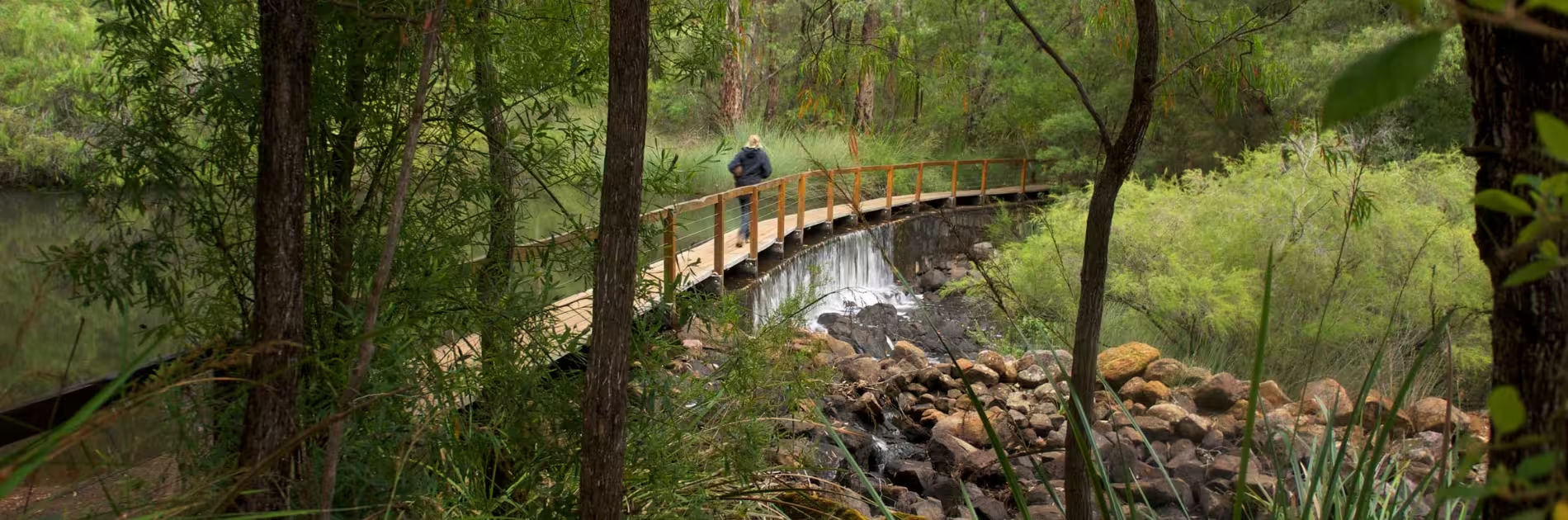
    Join FAWNA for a behind-the-scenes tour of two innovative wildlife rehabilitation facilities in Ludlow, where a former mineral sand mine is being transformed into a thriving conservation landscape.

    Located on a rehabilitated mine site, the Possum Finishing School and FAWNA Flight Academy demonstrate how degraded land can be repurposed to support biodiversity, research and wildlife recovery. 

    This tour offers a unique opportunity to see conservation in action, showing how community effort, scientific innovation and habitat restoration can transform degraded land into a future for Western Australia’s native wildlife.

    Meeting point: Site address: Low Road turnoff Tuart Drive, Capel.

    Search for “Low Road, Capel” in your Maps app.

    Look for the FAWNA signs outside the front gate.

    Please arrive no later than 7.45am for an 8am start

    What participants will experience:

    • The Possum Finishing School Learn how critically endangered Western Ringtail Possums are prepared for release back into the wild through evidence-based rehabilitation programs developed in partnership with researchers and conservation agencies.
    • The FAWNA Flight Academy Explore this purpose-built facility designed to help rehabilitate hundreds of injured land and seabirds each year, giving them the space and conditioning needed to return to their natural habitats. 
    • A Landscape in Transformation Discover how volunteers, conservationists and community members are working together to restore a former industrial site into a place of ecological restoration, wildlife conservation and environmental education. 

    Requirements:

    • Tour is partially wheelchair accessible and can be made fully accessible with matting if notified in advance. Toilets are wheelchair accessible.
    • Tour takes place in 100m of bushland, please wear suitable shoes/clothing and bring water.
  • Nature Conservation Margaret River Region

    Site Visit

    Protecting Wooditjup Bilya: A Catchment Conservation Tour 

    Nature Conservation Margaret River Region

    9:00am – 12:00pm

    Wooditjup Bilya (Margaret River) is one of the healthiest river systems in the Southwest, with outstanding cultural, ecological and recreational values.

    Rather than restoring a degraded river, this mostly seated coach tour showcases how proactive, collaborative catchment management – including revegetation, scientific research and community partnerships – is protecting the river before largescale restoration becomes necessary. Participants will explore the challenges facing the catchment and learn how community-led action is helping safeguard this remarkable river for future generations.

    Meeting points:
    PICK UP 1 – 8am: Busselton Community Resource Centre; 21 Cammilleri St, Busselton WA 6280
    PICK UP 2 – 9am: Margaret River Community Centre; 21/33 Tunbridge St, Margaret River Western Australia 6285 

    Tour stops: 

    • Jindong–Treeton farm revegetation site 
    • Barrett Street fishway 
    • Margaret River mouth (time permitting) 

    Duration: Approximately 3-3.5 hours, including coach travel. 

    What participants will experience:

    • Visit an upstream farm revegetation project and discuss its role in landscape-scale restoration protecting river health. 
    • Explore how science is informing catchment management in a changing climate. 
    • Hear how community research is shaping behaviour change and stewardship programs. 
    • Visit the Barrett Street fishway to learn about freshwater biodiversity and collaborative conservation. 
    • Discuss the partnerships and approaches helping protect one of the South West’s healthiest rivers, and consider how they could be applied in other catchments. 

    Requirements:

    • Travel by chartered coach. 
    • Easy to moderate walking (up to 2 km) on uneven tracks and river paths. 
    • Participants should wear enclosed shoes, a hat, sunscreen and weather-appropriate clothing, and bring a water bottle.  
    • Some locations have uneven ground and limited accessibility. 
  • Cape Naturaliste Conservation Enterprise

    Site Visit

    A Walk in the Park – An insight into the complexities of Meelup Reserve

    Cape Naturaliste Conservation Enterprise

    Meelup Beach Carpark

    9:00am – 12:30pm

    Discover the rich natural, cultural and geological story of Meelup Reserve on this guided morning tour. Led by knowledgeable volunteers and local contributors, the walk explores Wadandi connections, unique coastal flora, regional history, conservation efforts and the ongoing work to protect the reserve’s special values. 

    Many of us are familiar with and love Meelup Beach, but did you know that the Meelup Reserve has a complex and hotly debated geology, First Nations connection, and interesting recent history? It also has a complex flora, with many species long-separated from their relatives on the Darling and Whicher Ranges.  

    You’re invited to join us for a walk in the park, where you can learn all about it from our well-informed volunteers. There will be a Welcome to Country by Traditional Custodians, who will share their history of Meelup, followed by a recent history of contemporary use.

    Meeting point:

    Meet at 9am at the Meelup Beach Carpark, and come prepared for a guided walk along coastal bush tracks.

    What participants will experience:

    • Wadandi connection and use of the area 
    • A flora walk with the chance to see migrating whales 
    • The recent history of the area
    • How landholders are working together to protect the natural values of the reserve 
    • Morning tea and a chance to chat to the Friends of Meelup 
    • Short drive to visit a local landowner and learn about the Cape Naturaliste Conservation Enterprise, where local landholders are working together to protect the natural and cultural values of the Cape Naturaliste region

    Requirements:

    • Places are limited to 30 people, so early booking is recommended. 
    • If there is enough interest, a shuttle bus may be organised from Busselton to Meelup and return. Places on the shuttle are limited to 11 people – book your shuttle bus place here.

  • Opening Address

    Program

    Opening Address

    Breaking the false dichotomy of ‘The Regions vs the City’ 

    Main Hall

    9:15am – 9:35am

    CCWA Director Matt Roberts addresses the manufactured divide between regional and urban communities.

    While acknowledging real disparities in funding and services, this session explores how dividing us undermines our shared influence, and why standing together builds the collective power needed to drive lasting, statewide change. 

  • Keynote Address

    program

    Keynote Address

    Ry Atkinson – Surfers for Climate

    Main Hall

    9:35 AM – 10:15AM

    From Waves to Change: How Place, People and Young Voices Are Transforming the Climate Movement  

    Join Ry Atkinson, Campaigns and Programs Director at Surfers for Climate, a national ocean and climate advocacy organisation, to explore how deep connection to place, youth leadership, and grassroots action are reshaping climate activism.

    Drawing on key campaigns like protecting Scott Reef and supporting regional renewables in the South West, this keynote highlights how coastal communities and younger generations are mobilising to drive tangible, lasting environmental change on the ground 

  • Presentations: Balancing Development with Natural Values

    Program

    Presentation

    Balancing Development with Natural Values

    Main Hall

    10:45am – 11:30am

    How can the South West meet growing pressure for tourism, housing and infrastructure while protecting the natural places, cultural landscapes and community values that make the region unique?

    This session explores the ongoing tension between development and conservation through real-world coastal planning debates and high-profile campaigns to defend Smiths Beach, Save Scott Reef and protect the Kimberley from Fracking.

    Drawing parallels between lived experiences in the South West and lessons from the Kimberley, the discussion brings together campaign, planning, and coastal perspectives to examine what responsible development looks like when biodiversity, community identity, and Country are treated as non-negotiable priorities. 

  • Panel Discussion: From Local Threats to Collective Power

    Program

    Panel Discussion

    From Local Threats to Collective Power

    Main Hall

    11:30am – 12:30pm

    This panel discussion will bring together diverse voices working to protect and restore South West Western Australia’s unique environments while exploring the deeper changes needed to secure their future.

    Framed by the theme Protect, Restore, Transform, the conversation will move from urgent local threats to the power of collective action, highlighting how First Nations knowledge, community leadership, conservation science and cross-sector collaboration can shape a more resilient and connected region. 

  • Workshop: Working With What We’ve Got

    program

    Workshop

    Working With What We’ve Got

    1:30pm – 3:00pm

    Building on the panel discussion, From Local Threats to Collective Power, this interactive workshop invites environmental groups, community leaders, and advocates to explore what realistic on-the-ground action for nature looks like in the South West right now.

    In a context of growing development, tourism, and resource pressures, and where traditional campaigning or funding may be limited, how do we move from what we want to what we can realistically do?

    What to expect:

    • Grounded Local Examples: Hear short, practical snapshots from the region, including Jim Underwood sharing the Pallinup-Marra Healthy Country Plan as a practical example of Cultural leadership, collaboration, and moving from planning into action.
    • Small-Group Breakouts: Collaborate with peers across regions and sectors to unpack current challenges, identify key levers (such as youth engagement and local storytelling), and map out realistic steps for your organisation.
    • Action-Oriented Planning: Walk away with concrete strategies, renewed connections, and at least one actionable step you can take in the next 6–12 months.
  • Workshop: Engaging with Local Councils

    program

    Workshop

    Back from the Brink: South West in Focus

    1:30pm – 3:00pm

    This workshop invites participants to collaboratively discuss where policy is failing nature in the South West of WA, connect those issues to the policy reforms recommended in Back from the Brink: A Protection Agenda for Nature, and begin to explore collective advocacy responses and strategies. 

    Workshop : Back from the Brink – Best for participants wanting to connect local South West threats (Jarrah forest, mining, species loss) to state-wide policy reform and advocacy strategies.

    Workshop objectives

    • Identify South West case studies of environmental threats and pressures that demonstrate where policy is failing and outline what stronger protection could look like
    • Support participants to connect local issues with the policy reform agenda and recommendations outlined in Back from the Brink.
    • Discuss collective advocacy, community action and partnerships that participants can take forward.

    Note participants should come into this workshop with prior understanding of local South West threats and issues they are passionate about, e.g. habitat clearing, biodiversity loss, climate impacts, changing fire regimes, invasive species, disease such as dieback, pressures on threatened species. Prior reading of Back from the Brink is recommended. 

  • Presentation & Discussion: The future of bushfire management in the Southwest

    PROGRAM

    Presentation & Discussion

    The future of bushfire management in the Southwest

    1:30pm – 3:00pm

    Since the 1960s, WA has relied on prescribed burning in Southwest forests with the aim of reducing the risk of bushfires; however, prescribed burns are causing significant damage to forest and woodland ecosystems and face mounting social resistance.

    Instead, fire management can and must evolve to a program focused on rapid detection and suppression strategies alongside First Nations-led cultural burning and only targeted, low-intensity burns.

    Hear from First Nations land managers, those using technology to predict and rapidly detect fires, and conservationists envisioning better futures for fire management in the Southwest.